Tuesday, September 2, 2014

Mamee Apple Chutney

I'm so enamored with mammee apples. They aren't found commonly here, but I sometimes find them at Maku'u farmer's market from vendors/growers who embrace exotic fruits. Firm and tangy, they ease my craving for a summer nectarine or apricot.

mammee apple - yum!
 I found that Mammee apples also substitute for mangos in chutney. The should work in any recipe - try your favorite and let me know! I made some chutney with ingredients on-hand, trying to keep it mostly-local.

3 cups chopped ripe mammee apple
1/4 cup palm sugar
1/2 cup vinegar (used homemade pineapple vinegar, if using something strong, may want to use less.)
1 tablespoon curry powder
1/3 cup diced shallots
2 in piece grated fresh ginger

Mix all ingredients together in medium sauce pan.

mixed, before heating

Simmer together ~15 minutes, low heat, stir often. Mixture will

mammee apple chutney served with quinoa pilaf and homemade raita
Delicious!


Saturday, July 19, 2014

Purple Carrot Soup

Purple Carrot Soup on a stormy night.
*vegan*

Harvest time for the purple carrots in our garden mean that I can make the purple carrot soup I've dreamed of so long... well, since I planted the carrots about 93 days ago. These purple carrots are super-healthy due to the anthocyanins. Purple carrots seem exotic to us, but the common orange variety is actually the weird mutant. Read a bit about the strange and wonderful history of carrot color here.

garden-fresh purple carrots

~5 cloves of garlic (to taste)
1 veggie bullion cube
2 large shallots (or 1 onion), chopped
3 large purple carrots, chopped
~1 cup chopped cauliflower (optional)
~2 inch piece of ginger, diced
1 can of coconut milk
salt & pepper to taste

Minced the garlic on a garlic grater and put aside (so that the healthy allicin molecules can be synthesized)

Put veggie bullion and 1 cup water in medium size pot on stove. Add chopped shallots, carrots, cauliflower, and half of the ginger.

Simmer about 20 minutes, stirring occasionally.

not the prettiest photo of the veggies getting soft

Add the rest of ginger and garlic and simmer 5 more minutes.

Let stand about 10 minutes to cool a bit.

Blend (with blender or hand mixer) until it is as smooth as you'd like.

Return to pot and add coconut milk.

Stir to mix together and add salt and pepper to taste. Reheat on low heat for about 5-10 minutes.

Serve in a bowl that shows off the fun purple color.

purple carrot, cauliflower, coconut milk soup

Delicious!

This wasn't made with local-only ingredients, but it certainly *could* be.

Thursday, January 9, 2014

tangerine marmalade with cardamom and vanilla


Pahoa Village was once known for its tangerines. Most of the orchards have disappeared, but half a dozen 70 year old trees surround our little house. They produce copious quanities of delicious fruit, most of which tragically goes to waste. Our morning fresh-squeezed juice accounts for some, but our tangerine wine trials from last year didn't yield great results. After learning that most of the nutrition of citrus is in its peel, I decided to try marmalade again.

I based this recipe on this Epicurious tangerine vanilla marmalade recipe, decreasing the sugar and adding my favorite spice: cardamom.

This country-style marmalade celebrates the bitter flavors of the citrus peel, combining them with the sweet spices of vanilla bean and cardamom seeds. We happened to have some plain shortbread received as a holiday gift. The marmalade was an amazing complement when served with hot tea. We found that it is also wonderful in crepes.

Ingredients:

2 lbs tangerines
0-4 cups tangerine juice(or substitute water)
1 lemon (I used a meyer lemon)
2.5 cups sugar (I used organic cane sugar)
1 vanilla bean
12 green cardamom pods
1/4 tsp ground cardamom

 
tangerines from our 70-year-old trees

Quarter and slice cross-wise 2 pounds tangerines (about 6-8 of ours) and 1 lemon. Collect in a large bowl. I found that lightly squeezing the juice from the quarters and into the bowl before slicing allowed me to collect more of the juice. Otherwise, it is lost to the cutting board and counter. You can use everything except the seeds, but I also cut off a bit of rind at the ends for aesthetic reasons. Add about 4 cups liquid to cover the slices. I used 2 cups tangerine juice and 2 cups water. The recipe I was working from said to use water, but the suggestion by a commenter to use juice was irresistible to me. Let soak for a day, covered, at room temperature.

tangerine and lemon slices ready to soak overnight

 The next day, transfer slices and liquid to a pot. Add the seeds of a vanilla bean. You can also let the bean simmer, too. I cut the bean lengthwise and crosswise, ending up with 4 pieces. Simmer uncovered for 1 hour 15 minutes, stirring occasionally to distribute the vanilla seeds and prevent sticking at the bottom of the pot. Keep watch for any seeds that might have slipped in and remove them.

tangerine slices simmering with vanilla bean

Remove from heat and add the sugar, stirring until dissolved. Use more or less than 2.5 cups sugar to taste. Simmer another 1 hour 20 minutes, stirring occasionally and more frequently as the time elapses. During this time, prepare canning accessories - jars, lids, etc. Also, remove cardamom seeds from the pods and grind.

crushed cardamom seeds

 About 10 minutes before the time ends, add the crushed cardamom. I also added 1/4 teaspoon of ground cardamom because I love that flavor! Stir in.

10 minutes before ladling to jars, cardamom added

At the end of the time, remove pot from heat, remove vanilla bean pieces, stir, and ladle into jars. This recipe yielded almost exactly 5 1-cup jars for me. Either can the jars to store at room temperature or allow the jars to cool then refrigerate.

tangerine marmalade with bits of cardamom seeds and vanilla seeds

I love the vanilla and cardamom flavors in this marmalade. It made a wonderful gift for family over the holidays. Two weeks later, my mom already asked for a refill.

tangerine marmalade with vanilla and cardamom


Monday, October 14, 2013

Harvesting Pigeon Peas


Pigeon peas deserve their standing as a permaculture favorite. These plants grow fast, last for years, fix nitrogen, can be used as a "green manure" to feed other plants, can be grown as a hedge to block pigs' access, plus the peas are delicious. The pea can be used fresh, like other shelled peas or edamame soy beans, or allowed to dry on the plant to be used as a bean. Here in the windward tropics, using them fresh is much easier.

a beautiful day for harvesting pigeon peas
Our plants had two harvests this year, on in May and one in October. It takes a while to pick and shuck the peas, but it is easy, pleasant work with great reward.

pigeon peas on the plant


The pods are ready to pick when they reach full size. I like to gently squeeze the pods to see if the peas are filling out the bulges in the shell. Sometimes a pod can look ready, but the peas inside are still small.


shucking pigeon peas


I rinse the pods and leave them an hour or so to dry a bit. To shuck the peas, pry the two haves of the pod apart - it gives easily. Each pea needs to be freed from the pod.


quinoa salad with pigeon peas

I used these pigeon peas to make a simple salad with quinoa, carrot, olive, soy sauce, and balsamic vinegar. The peas a lightly steamed. In the past, we've used them in soup, stir fry, and on salads. Yum!

The internet is full of great pigeon pea resources and recipes. Here are a few of my faves:

basic information from tropicalpermaculture.com
nutrition information from sfgate.com
pigeon pea recipes from epicurious.com

Sunday, September 22, 2013

Evil Princess Jungle Delight - local ingredients recipe

 Evil Princess Jungle Delight

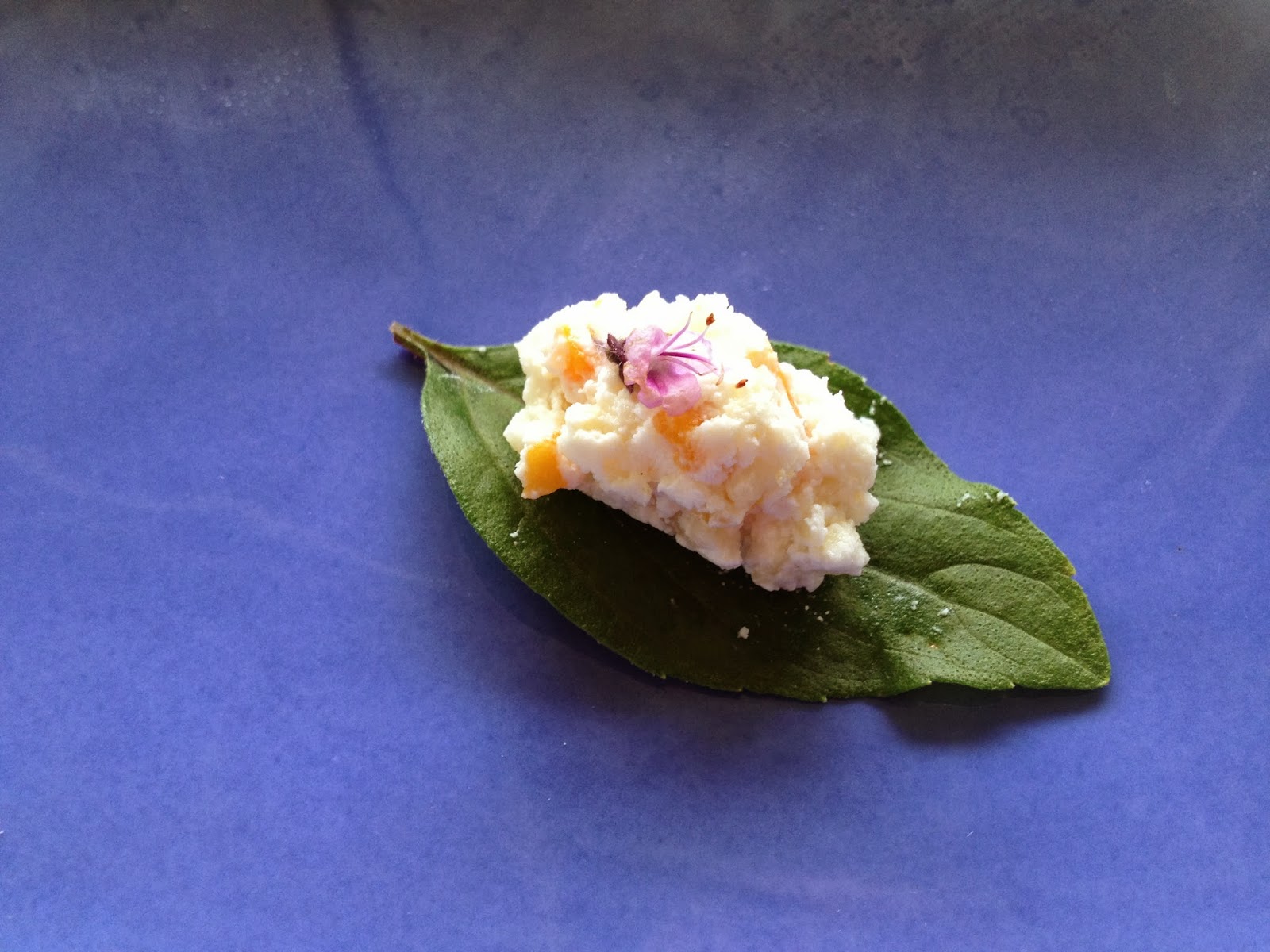
We entered this all local ingredients recipe in the La'akea cooking contest and won the savory category. This appetizer is perfect party finger food and is very easy! The rich goat cheese and mac nut flavors are augmented by the sweet and crisp mammee apple and the fresh spice flavors of basil, thyme, and edible hibiscus are a wonderful counterpoint.

Ingredients:

8 oz locally made goat cheese - we used Lava Rock "Natural"-flavor Puna Goat Cheese
1 cup crushed local macadamia nuts
3/4 cup diced, fresh, local mammee apple - could substitute many other fruits, like apricot or persimmon
fresh thyme leaves to taste - from our garden
fresh minced edible hibiscus leaves to taste (and for color!) - from our garden
washed & dried fresh basil leaves - from our garden
optional basil flower garnish - from our garden

crushed mac nuts, goat cheese, diced mammee apple
Ingredient notes:

The measurements above are approximate and can easily be altered depending on your taste and what you have available. The thyme and hibiscus are not critical. Next time I will probably add some nasturtium flower for a peppery flavor.

Instructions:

Wash and dry basil leaves. We used about 30 leaves for about 1/3 of the cheese/nut mix.
basil and hibiscus washed and drying
Prepare indredients - dice mammee apple, crush mac nuts, and mince hibiscus.

mammee apple, my new favorite fruit

Mix the goat cheese and mac nuts with the thyme, hybiscus, or other spices.


Fold in the mammee apple.


Place about a teaspoon of cheese mix on each leaf and top with a flower or other garnish.


And you are ready to feed any evil princesses wandering through your jungle!

Evil Princess Jungle Delight
Mahalo nui loa to La'akea for the inspiring contest and seed exchange event! Mahalo nui loa to Island Naturals for donating our prize!

Saturday, September 21, 2013

La'akea Seed Exchange 2013

La'akea intentional permaculture community is figuring it out and passing it on. They grow much of their own food as well as teach classes about tropical permaculture. Today they hosted a seed/cuttings exchange, local foods cooking contest, and potluck. Teaching people about and building community around locals foods was clearly the goal. Dozens of people participated on this sunny and rainy Puna day, and the energy of kids and dogs running around created an infectious excitement.

La'akea's panel of local food experts

The morning's activities included a panel of knowledgeable and informative local food experts. Led by Stuart Blackburn, the panel included:

Dija of Dragon's Eye Learning Center walked us through the steps of making yogurt and yogurt cheese from raw milk.

Jen of Paradise Nectar talked about the need to let bees defend themselves against their newest foes: hive beetles and mites. She keeps bees using natural methods, without chemicals or antibotics, with great success. She discussed types of bee products and her newfound hobby of mead-making.

Tracy of La'akea has been experimenting with local-growing grain four substitutes. Her favorite finds so far are taro, cassava, and peach palm flours. She finds that mixing these flours can produce a balance between good nutrition and usable texture.

The audience talk story that followed was full of useful information and thoughtful questions. It is clear that the Puna community is embracing the challenge of local foods.

A site tour and marimba concert rounded out the fun day. We were delighted and humbled to learn that our entry into the cooking contest took the "savory" prize for our "Evil Princess Jungle Delight" dish! (Recipe to follow.)


Wednesday, March 14, 2012

Recipe Remake: thumbprint cookies with Hawaiian ingredients

I'm currently collecting recipes that can be made with only island-grown ingredients. Grains pose a particular challenge, since they are the staple of so many people's diets but aren't grown here. Breadfruit (called 'ulu in Hawai'ian) is a potential grain-substitute in many recipes. In addition to being a plentiful, local food, it is healthier than grains, too!

In the following recipe, I've adapted one of my favorite cookies to use 'ulu instead of flour, macadamia nuts instead of pecans, and coconut instead of oatmeal. It uses no additional sugar or oil. I used cardamom instead of more traditional spices, because I love the way the delicate complexity of the spice interacts with the sweet 'ulu flavor. Cinnamon, nutmeg, and other cookie spices could be used instead or in addition.

The resulting recipe is easy, healthy (for a dessert), and can be sourced completely locally! Plus, these cookies are gluten free and vegan, and still: delicious! The proof? They won Best of Show in the Puna 'Ulu Festival recipe contest a few weekends ago. It was my first cooking contest entry - I was so delighted!


*award winning* Pūnana Cookies

for about 2 dozen cookies:
1&1/2 cups ripe 'ulu, steamed - use breadfruit that is sweet and mushy
1 cup finely chopped raw, unsalted macadamia nuts
1/2 cup shredded, dried, unsweetened coconut
Pinch sea salt
1 teaspoon cardamom
tart jelly/jam - liliko'i ginger jelly is especially ono
Macadamia nut oil for pan, optional
Preheat oven to 350°F. 
Mash steamed breadfruit using a crank processor, a potato masher or a brief pulse in a blender.  The resulting paste should be sticky and clumpy, like buttermilk frosting.
Put the macadamia nuts, coconut, salt and cardamom in a mixing bowl and fold in the breadfruit paste, much like mixing butter into a batter until all the ingredients are well incorporated.
Either wipe a cookie sheet with macadamia oil or use a non-stick cookie sheet.  Take about one tablespoons of breadfruit batter and roll into a ball.  Form the dough into a nest with an impression on top for the jelly.  Wet hands can help form the well-structured nest.  Fill the sheet with the nests about 1 to 2 inches from each other.  Then add about 1/2 a teaspoon of jelly to each nest.  Liliko’i jelly is ono because of its bright, tart flavor, but any firm jam or jelly will work.
Put the cookie sheet into the oven and bake at 350 degrees F for about 20 minutes, or until the cookies are lightly browned on the bottom and/or top.  Remove and cool on a rack.  Enjoy!

Now the pictorial tutorial:


Choose breadfruit that is soft (from ripeness not from bruising!) - it will usually be a golden color, but sometimes still green. A 2 lb breadfruit should be enough for a single batch. Steam for about an hour, then cut off skins and cut into chunks.

We use a simple hand-crank food processor.

Not much processing is needed for ripe breadfruit. It's consistency should be somewhere between mash potatoes and frosting. If the breadfruit does not stick together, try adding a little splash of water.

Processed ingredients (breadfruit, coconut, nuts, cardamom, salt) before mixing.

I've found that folding the breadfruit into the dry ingredients, much like you would fold butter into flour, works well. Mix with a spoon or spatula until ingredients are evenly distributed.

Use a nonstick cookie sheet or grease a regular sheet. I put a light coat of macadamia nut oil on my non-stick sheets. The oil isn't necessary, but increases browning. Take about a tablespoon of batter an shape a nest. Make sure the sides and bottom are solid, so the jelly can't leak during baking.

Add about 1/2 teaspoon of jelly to each nest. I use my homemade liliko'i-ginger jelly. I think any tart, bright flavored jelly or jam would be delicious.

In my oven set to 350 deg F, these cook for 25-30 minutes. I take them out when they start to brown. Then, they cool on a cookie rack.
Using the same batter and adding dark chocolate chips instead of jelly makes pretty darn good chocolate chip cookies. These are made with Scharffenberger chocolate chunks my mom sent. Thanks, Mom!